Everyday AI users
Chat with any model and switch in one click, without four separate subscriptions.


 Comparison · 2026
Every model you would otherwise pay for separately
ChatGPTClaude Gemini
 Grok
 DeepSeek
 Perplexity
 Midjourney
 Nano Banana
 Flux
 Ideogram
 Imagen 4
 Veo
 Kling
 Luma
 Wan
 HeyGen
 ElevenLabsChatGPTClaudeGeminiGrokDeepSeekPerplexityMidjourneyNano BananaFluxIdeogramImagen 4VeoKlingLumaWanHeyGenElevenLabsPlus $20/mo
Claude: Pro $20/mo ($200/yr)
Pyxa: From $49.99 once
Codex; strong on front-endClaude: Claude Code; leads Terminal-Bench
Pyxa: Switch between GPT and Claude models with one click
Templates, custom GPTsClaude: Natural tone, long drafts
Pyxa: Run both, keep the better draft
Expanded deep research on PlusClaude: Web search from Free
Pyxa: AI Webchat and Perplexity
Expanded uploadsClaude: Large context at the API
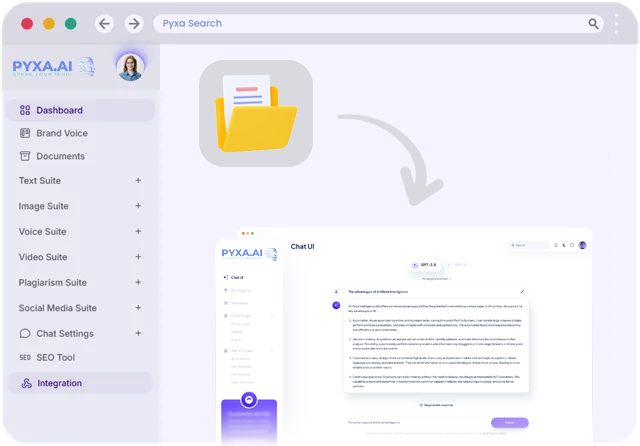
Pyxa: AI File Chat (PDFs, spreadsheets, presentations)
Yes, on every tierClaude: Not listed on overview
Pyxa: AI Image Pro with Midjourney, Nano Banana 2.1 and GPT Image 2.5
Prices as listed on the official pricing pages on 2026-11-23. Pyxa is one payment, with no monthly fees ever.
| Plan | Price | What you get |
|---|---|---|
| ChatGPT Plus | $20/mo | GPT-6.2 reasoning, expanded uploads, image creation, deep research, Codex |
| Claude Pro | $20/mo ($200/yr) | More usage than Free, Claude Code, Projects, connectors, Chrome and Microsoft 365 |
| Pyxa AI Master Creator | $49.99 once | Lifetime access to text, image, video and voice tools with leading AI models in one dashboard. New models added at no extra cost. |
Both plans combined: $20 + $20 per month times months vs Pyxa's one-time price. Taxes excluded.
Here is the short version of ChatGPT vs Claude, task by task. Each row is explained below with the evidence.
If you came here asking chatgpt or claude which is better, the honest answer is: it depends on the job, and many people end up paying for both. For a wider four-model view that includes Gemini and Grok, see our ChatGPT, Claude, Gemini and Grok comparison.
For coding, Claude has the stronger public record right now. On Terminal-Bench 4.0 (vendor-reported, collected by Morph), Claude Sonnet 5.5 scores 70.6%, Claude Opus 5.5 scores 66.4% and GPT-6 Astra scores 57.9%. BenchLM's comparison lists Claude Fable 5.2 at 93 on SWE-bench Pro, with no sourced SWE-bench Pro row for GPT-6.2 Astra.
ChatGPT is not far behind where humans vote. Morph notes GPT-6 Astra has the stronger human-preference signal on the Frontend Code Arena, so front-end work is a fair reason to pick ChatGPT. Both products also ship an agent for repos: Codex is part of ChatGPT Plus, and Claude Code is part of Claude Pro.
Caveat: benchmarks move monthly and many are vendor-reported. Treat a gap of a few points as a tie and test your own repo. Verdict: Claude for most backend and agentic work, ChatGPT for UI-heavy tasks. A practical split many developers use: Claude for multi-file changes, refactors and long terminal sessions, ChatGPT for quick snippets, UI work in code and plain-language explanations of unfamiliar errors. Cost per task matters at the API too: Morph lists Claude Opus 5.5 at $4/$20 per million input/output, BenchLM lists GPT-6.2 Astra at $8/$40, and the cheapest tiers (GPT-6 Luna and Claude Haiku 5.5) both list at $0.10/$0.50. In Pyxa you can try both through Multi-Model AI and the AI Code Generator.
For writing, Claude is the usual pick for natural tone and long drafts. BenchLM reports Claude Opus 5.5 with the highest human-preference rating (1506) among the models it compares, against 1475 for GPT-6 Astra. Preference ratings reflect what voters like, not what is factually right, so read them as a style signal.
ChatGPT is stronger when you want structured output fast: outlines, many variations, rewrites to a template, or a custom GPT that holds your format. Projects, scheduled tasks and custom GPTs are listed on the ChatGPT Plus plan.
Where each one tends to slip: ChatGPT drafts can read generic or over-structured unless you give it a voice sample, and Claude can run wordy on short marketing copy. Either fix is a better prompt, not a different subscription. A good test is to paste the same 300-word brief into both, then edit the winner. Repeat it three or four times before you decide, because one sample proves little.
Verdict: Claude for essays, reports and anything that must sound like a person; ChatGPT for repeatable formats and volume. If you publish regularly, the AI Text Generator in Pyxa lets you run the same prompt through both and keep the better draft.
Both assistants search the web. Claude's Free plan already lists web search, and its overview says it can "search the web for current information." ChatGPT's pricing page separates the tiers by depth: Free has limited deep research, Plus has expanded deep research, and Pro has maximum deep research.
OpenAI does not publish a message count for Plus, and Anthropic does not either. Claude Pro is described as "more usage than Free, every 5 hours and every week," so heavy research sessions can hit a wait. Verdict: ChatGPT for long, multi-source research runs; Claude for quick lookups and for reasoning over sources you paste in. Always open the cited links before you rely on a claim, in either product.
A quick way to compare: ask both the same question that has a checkable answer, such as the current price of a product or the date of a recent release. Count how many cited sources actually support the answer. A model that sounds sure but cites thin sources should not be used for anything you publish or send to a client.
On raw context, there is little between them. At the API, Morph lists Claude Opus 5.5 at a context window of about 1M and GPT-6 Astra about 1.05M. App limits can be lower than API limits, and neither official pricing page states a context size for Plus or Pro, so we do not quote one for the apps.
What differs is behavior. Many users report Claude holds details across a long contract or report better, but that is anecdotal, not a benchmark. ChatGPT lists "expanded messages and uploads" on Plus and "maximum memory and context" on Pro. Verdict: tie on size; test your own document. A fair test is a 100-page PDF with a fact buried on page 80: ask for that fact, then ask for a summary that cites page numbers. Whichever misses fewer details wins for your work. Very long inputs can hit plan limits faster on ChatGPT and Claude. To chat with a PDF in Pyxa, use AI File Chat.
Images are the clearest gap. ChatGPT's plans list image creation at every tier, including "more complex and accurate image creation" on Plus. Claude's product overview does not mention image generation, so plan on a separate tool for pictures.
Voice exists on both: Claude's overview lists a voice mode ("talk to Claude instead of typing"), and ChatGPT lists limited voice chats on Free and more on Go and above. Verdict: ChatGPT for images; voice is a tie for conversation. If you want to generate images or voiceovers from the same login, Pyxa has the AI Image Generator and AI Voiceover.
ChatGPT's Plus plan lists Projects, scheduled tasks, custom GPTs, Codex and ChatGPT Work on desktop, web and mobile. Claude's Pro plan lists connectors to apps you already use, hand-off and scheduled tasks, Claude Code, Projects, Claude in Chrome and Microsoft 365.
The shapes differ. ChatGPT has the bigger catalog of user-made GPTs. Claude leans toward working inside your existing tools, including a desktop-files workflow. Verdict: ChatGPT for a wide app ecosystem, Claude for office and developer workflows. Both are moving fast here, so check the current feature list before you pay for a year.
Checked on the official pages on 2026-11-23: ChatGPT Plus is $20/month, with Go at $8/month below it and Pro from $100/month above. Claude Pro is $20/month, or $200 billed up front for the year ($17/month equivalent), with Max at $100/month.
The limits work differently. Claude uses rolling windows every 5 hours and every week; ChatGPT lists "expanded" access without public numbers. Pro and Max tiers exist on both sides for heavy use. For single-plan details see ChatGPT Plus price and Claude Pro price.
Together, Plus and Pro come to $40/month, $480 a year. Pyxa's lifetime plans start at $49.99 once, with no monthly fees ever and no daily caps.
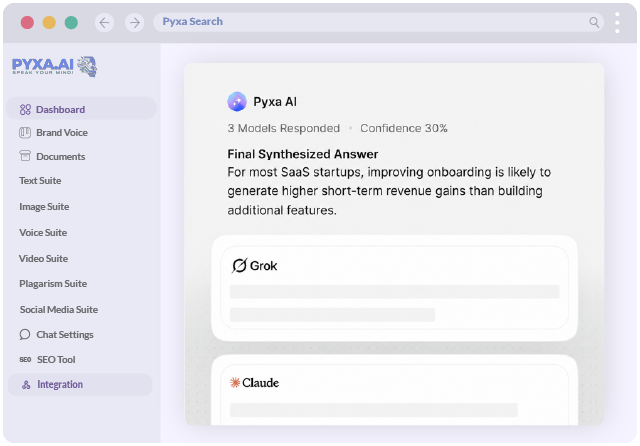
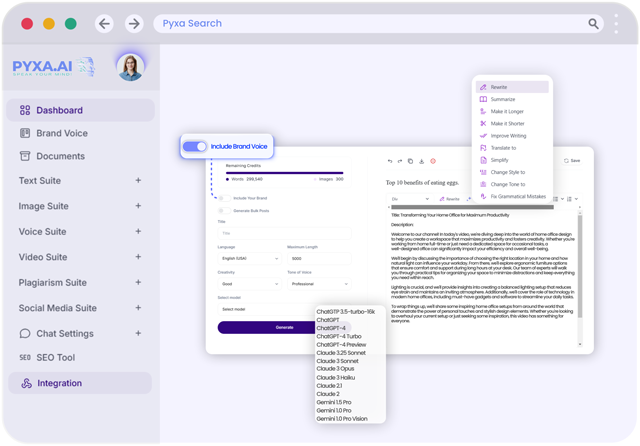
Pyxa lets you use ChatGPT (GPT 6.1 Sol) and Claude (Sonnet 5.5) in one place, alongside Gemini 3.8, Grok 4.7, DeepSeek v4 and Perplexity, so you can send the same prompt to each and keep the better answer. Switch between models with one click, or use the AI Council to run several models in parallel and get a combined view of agreements, disagreements and a consensus answer. See the Multi-Model AI and full model list pages. Pyxa is an independent platform that integrates with various AI APIs; it is not affiliated with, endorsed by or sponsored by OpenAI or Anthropic.
The honest limits: you use these models inside Pyxa, so you give up some native features, such as ChatGPT's own custom GPT store or Claude Code in the Claude app. If you rely on those, keep that one subscription and use Pyxa for the rest. Comparing models head to head is also covered in Claude vs Gemini.
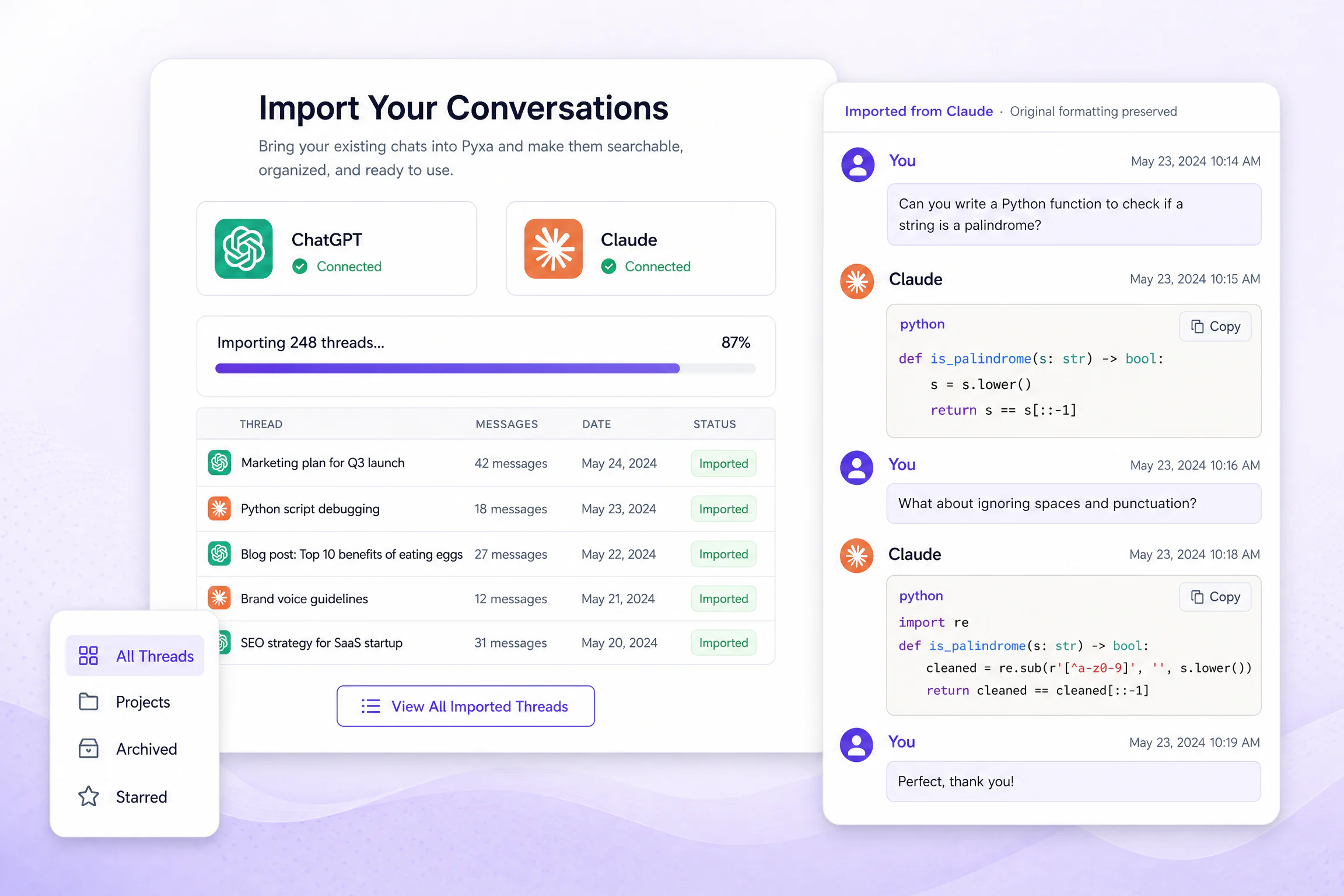
A simple routine: draft in Claude, check facts and generate visuals with ChatGPT-family models, and keep every chat in one place by bringing your old chats from ChatGPT or Claude into Pyxa with Import Conversations. There are no API keys and no multiple tabs to juggle, and when new models come out they are added to your existing plan for no extra cost.
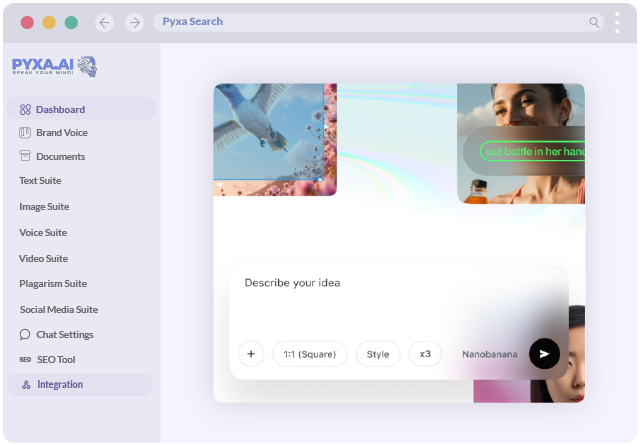
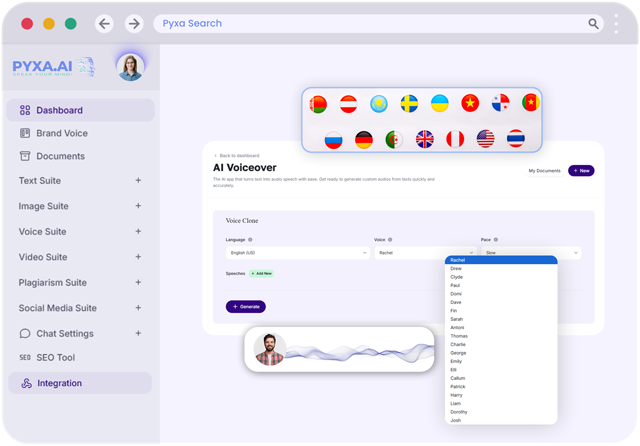
Real screens from the Pyxa app. Pick a feature to see it.
Official pages checked 2026-11-23
| ChatGPT | Claude | Pyxa AI | |
|---|---|---|---|
| Price | Plus $20/mo | Pro $20/mo ($200/yr) | From $49.99 once |
| Coding | Codex; strong on front-end | Claude Code; leads Terminal-Bench | Switch between GPT and Claude models with one click |
| Writing | Templates, custom GPTs | Natural tone, long drafts | Run both, keep the better draft |
| Web research | Expanded deep research on Plus | Web search from Free | AI Webchat and Perplexity |
| Long files | Expanded uploads | Large context at the API | AI File Chat (PDFs, spreadsheets, presentations) |
| Image generation | Yes, on every tier | Not listed on overview | AI Image Pro with Midjourney, Nano Banana 2.1 and GPT Image 2.5 |
| Voice | Yes | Yes | AI Voiceover and Voice Clone |
| Limits | Not published for Plus | Every 5 hours and weekly | No daily caps |
| Official app | Yes (OpenAI) | Yes (Anthropic) | No, models used inside Pyxa |
Chat with any model and switch in one click, without four separate subscriptions.

Write SEO articles with several models, check plagiarism and publish to WordPress in one click.

Keep a brand voice per client and deliver plagiarism-checked drafts faster.
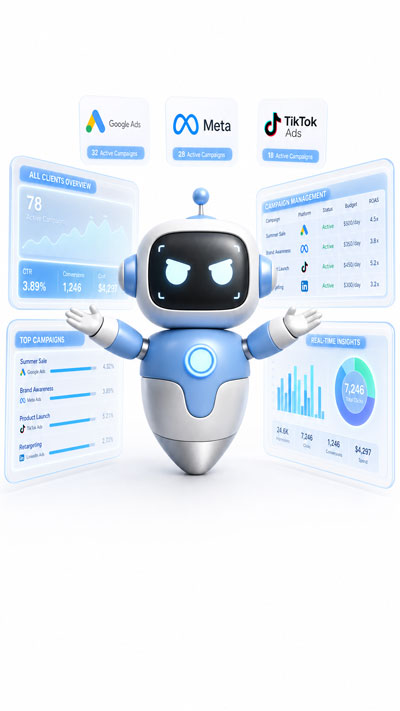
Ad copy, landing pages, emails and creatives for many clients from one place.
Lifetime pricingNo monthly fees, no daily caps, no API keys. New models are added to your plan at no extra cost.
Still unsure? Every plan has a 7-day money-back guarantee.
One lifetime payment instead of $40 a month. 7-day money-back guarantee.