Everyday AI users
Chat with any model and switch in one click, without four separate subscriptions.


 Comparison · 2026
Every model you would otherwise pay for separately
 ChatGPTClaudeGemini
 Grok
 DeepSeek
 Perplexity
 Midjourney
 Nano Banana
 Flux
 Ideogram
 Imagen 4
 Veo
 Kling
 Luma
 Wan
 HeyGen
 ElevenLabsChatGPTClaudeGeminiGrokDeepSeekPerplexityMidjourneyNano BananaFluxIdeogramImagen 4VeoKlingLumaWanHeyGenElevenLabsClaude Pro $20/mo ($17/mo yearly)
Gemini: Google AI Pro $19.99/mo
Pyxa: Master Creator $49.99 once
Opus, Sonnet, HaikuGemini: Gemini 4 Neon, Hydrogen, 3.1 Pro
Pyxa: Claude Sonnet 5.5, Gemini 3.8, GPT 6.1 Sol, Grok 4.7 and more in one login
Max at $100/mo for FableGemini: AI Ultra from $99.99/mo for Carbon
Pyxa: New models added to your plan at no extra cost
No, reads images onlyGemini: Yes, plus Flow credits
Pyxa: Yes: Midjourney, Nano Banana 2.1, GPT Image 2.5
NoGemini: Trial of Veo 3.1 Lite on Pro
Pyxa: Veo 3.1, Kling, Luma
Claude appsGemini: 5 TB storage, Deep Research
Pyxa: 150+ templates, SEO tools, chatbot builder, voiceover, AI Council
Two $20 plans add up. One lifetime payment does not.
| Plan | Price | What you get |
|---|---|---|
| Claude Pro | $20/mo | $17/mo if billed yearly ($200 up front); Opus, Sonnet, Haiku |
| Google AI Pro | $19.99/mo | Gemini 4 Neon, Deep Research, image generation, 5 TB storage |
| Pyxa AI Master Creator | $49.99 once | Lifetime access to text, image, video and voice tools with leading AI models in one dashboard. New models added at no extra cost. |
Combined monthly price of both plans × months vs Pyxa's one-time price. Taxes excluded.
Both companies sell a flagship, a mid-tier and a fast model, and the model your $20 plan gives you is not the flagship. That matters for every result below, so here is the lineup as of November 23, 2026.
On the consumer plans, Claude Pro lists Opus, Sonnet and Haiku, while Fable is part of Max ($100/month). Google AI Pro lists Gemini 4 Neon, Hydrogen and 3.1 Pro, while Carbon sits on Google AI Ultra (from $99.99/month). So at about $20 you are really comparing Opus 5.5 and Sonnet 5.5 against Gemini 4 Neon. Flagship benchmark charts describe the $100 tier, not the $20 one.
We checked the Claude and Google pricing pages and model docs today. Benchmarks come from the vendors' launch tables and public leaderboards, linked at the bottom. Leaderboards move weekly, so treat every score as a snapshot.
Writing is the hardest category to score, because there is no single public benchmark for voice, tone or editing taste. The best evidence we have points both ways.
On LMArena's blind-vote text board dated November 11, 2026, Gemini 4 Carbon led at 1526 (marked preliminary) and Gemini 4 Argon was second at 1522. Voters preferred Gemini's answers in head-to-head text chats. Claude Opus 5.5 sat third on an earlier snapshot at 1509.
Most working writers still describe Claude as the one that holds a brand voice across a long draft and edits without flattening the style. That is a widely shared opinion, not a measured result, so weigh it as such. Gemini tends to produce tidy, well-structured first drafts quickly and is stronger when the draft needs facts pulled from Google's own products.
Verdict: too close to call on scores. Pick Claude if you edit long documents in one voice, Gemini if you want fast structured drafts. For marketing copy, blog posts and SEO pages you can run the same brief through both and keep the better draft, which is exactly what Multi-Model AI is for.
Claude wins coding on the public numbers, at the flagship level and at the $20 level.
In Anthropic's November 9, 2026 launch table, Claude Fable 5.2 beat Gemini 4 Carbon on six of the seven benchmarks both were scored on. On FrontierSWE v2 it scored 69.9% against 61.2%. On FrontierCode 2.0 it scored 49.1% against 41.1%, with a caveat: Fable ran at its highest effort setting and Carbon at medium. Carbon won the seventh, AutomationBench, 53.9% to 51.4%.
The more relevant comparison for a $20 buyer is the LMArena WebDev board (data as of November 23, 2026): Claude Opus 5.5 scores 1820, Claude Sonnet 5.5 (xhigh) 1772, Gemini 4 Carbon 1769 and Gemini 4 Neon 1766. Claude holds the top two places, and its mid-tier model matches Google's top one.
Gemini's coding edge is price and speed: Carbon's API price is $2 / $10 per million through November 30, then $4 / $20 from December 1, against $8 / $40 for Fable 5.2. If you pay per API call volume for agents that run all day, that gap is large.
Verdict: Claude for coding quality, Gemini for coding cost at API scale. Pyxa's model list includes Claude Sonnet 5.5 next to Gemini 3.8, so you can compare them on your own code.
For long documents it is a tie on paper, because both families list a 1M context window, roughly 700,000 words.
The differences are in what you can feed in and how well the model finds things. Gemini accepts text, images, audio, video and PDFs in one request. Claude's docs list text and image input. Carbon scores 96.2% on the GraphWalks long-context retrieval test, according to Alpha Corp's roundup, and we found no matching published score for Fable 5.2.
For professional research tasks, the independent Vals AI index has the two almost level: Fable 5.2 at 71.3% overall and Carbon at 70.5%. Carbon is ahead on the legal index (75.9% vs 69.2%) and the finance index (67.0% vs 63.6%). Fable leads on Humanity's Last Exam with tools (74.2%), but Carbon has no score there, so that number does not settle anything.
On convenience, Google AI Pro includes Deep Research, and its 5 TB of storage ties the assistant to Gmail, Drive and Photos. Claude Pro does not bundle storage.
Verdict: Gemini for research that touches audio, video, legal or finance material and for Google-account workflows. Claude for dense reasoning over a pile of text. Treat it as a tie for plain PDFs.
Gemini wins this category outright, because Claude does not make images.
Anthropic's own docs say Claude is an image understanding model only: it can read, describe and analyze images, but it cannot generate or edit them. Google AI Pro includes image generation and editing in the Gemini app, 1,000 Google Flow credits and a limited trial of Veo 3.1 Lite for video. Gemini also takes audio and video as input.
What Claude does well here is reading: charts, screenshots, scanned forms and UI mockups. If your job is turning a screenshot into code, Claude is a strong pick. If your job is producing pictures, Gemini is the only one of the two that can.
Verdict: Gemini. If you want image models from several vendors, Pyxa's AI Image Generator lists options such as Nano Banana 2.1, Midjourney and GPT Image 2.5.
Gemini's Flash line is the fastest option from either company.
Third-party tracking (swfte.com, November 2026) lists Gemini 3.8 Flash at about 345 output units per second, Claude Haiku 5.5 at about 255, Claude Fable 5.2 at about 101 and Gemini 4 Carbon at about 78. These figures depend on provider load and settings, so expect different numbers on your own account.
The pattern holds up: small models are quick, flagships are slow, and Google's small models are the quickest. Claude's Haiku 5.5 is cheap at $0.10 / $0.50 per million and fast, but Gemini Flash still leads on raw throughput.
Verdict: Gemini. In Pyxa you can switch to Gemini 3.8 with one click when a task needs quick turnaround.
The monthly price is a wash: Claude Pro is $20/month ($17/month if you pay $200 up front for the year), and Google AI Pro is $19.99/month.
What you get for it differs. Google AI Pro adds 5 TB of storage, Deep Research, image generation and a trial of video generation on top of the chat model. Claude Pro gives you the Claude apps with Opus, Sonnet and Haiku and higher usage than the free plan, but the usage limits reset every five hours and weekly, and heavy users hit them. The step up is Claude Max at $100/month, which adds Fable (up to half your weekly limit). Google's step up is AI Ultra, from $99.99/month, which adds Gemini 4 Carbon.
Run both at the $20 tier and you pay $39.99 a month, or about $480 a year. See our Claude Pro price guide for the full Claude breakdown, and ChatGPT vs Claude if OpenAI is also on your shortlist.
Verdict: Gemini gives more bundled extras per dollar; Claude gives better coding models per dollar.
There is no single winner, which is the honest answer to "which AI is better" and "what is the best AI chatbot". The winner changes with the task:
| Task | Winner | Why |
|---|---|---|
| Writing | Tie | Gemini leads blind votes; Claude is favored for voice (opinion) |
| Coding | Claude | Leads FrontierSWE v2 and the WebDev board |
| Long documents | Tie | Both list 1M context; Gemini takes audio and video |
| Research | Gemini, slightly | Deep Research included; ahead on legal and finance indexes |
| Images and multimodal | Gemini | Claude cannot generate or edit images |
| Speed | Gemini | Flash models are the fastest listed |
| Price at $20 | Gemini | Same price, more bundled extras |
If you can only pay for one and you do mixed work, Google AI Pro covers more ground. If you write code for a living, Claude is worth the $20.
The reason this question never settles is that you rarely need one model for every job. You need Claude for the code review, Gemini for the image, and whichever is better for tomorrow's draft.
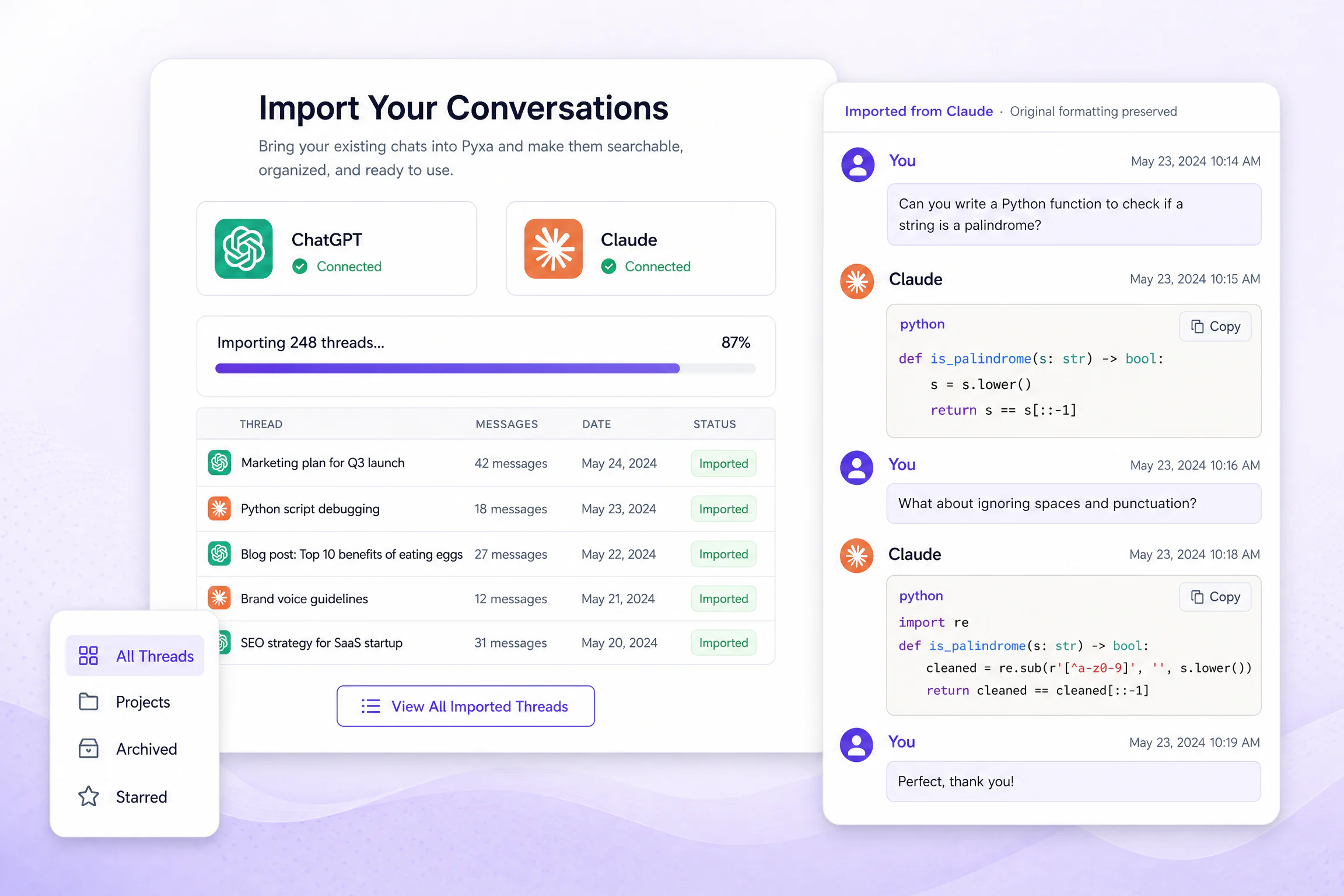
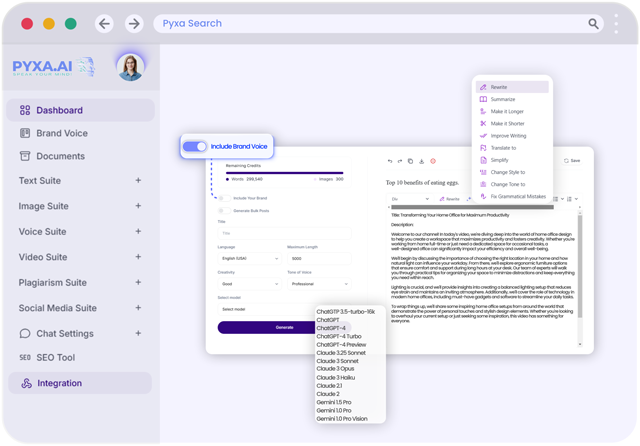
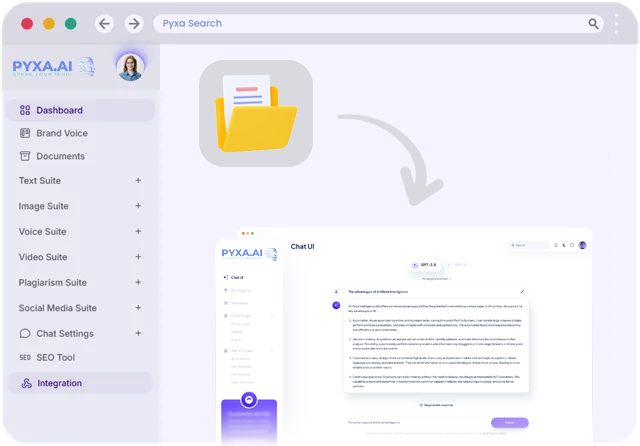
Paying for both plans costs $39.99 a month, and neither includes the other's best features. Pyxa AI is a different deal: one lifetime payment, one login, no daily caps and no API keys. Its model picker lists Claude Sonnet 5.5, Gemini 3.8, GPT 6.1 Sol, Grok 4.7, DeepSeek v4 and Perplexity, plus image models such as Nano Banana 2.1 and Midjourney, video models such as Veo 3.1, Kling and Luma, and voice tools. You switch models with one click, and the AI Council can run several models on the same question and show where they agree and disagree. You can also import old chats from ChatGPT or Claude and keep going.
When a vendor releases a new model, Pyxa adds it to your existing plan at no extra cost. Pyxa is an independent platform and is not made by, endorsed by or affiliated with Anthropic or Google; it integrates with their models. Check the models page for what is available today. If you need vendor-only extras such as Google's 5 TB of storage, the vendors' own plans are still the place for that.
For most people who bounce between Claude and Gemini, one payment of $99.99 replaces about two and a half months of paying both subscriptions.
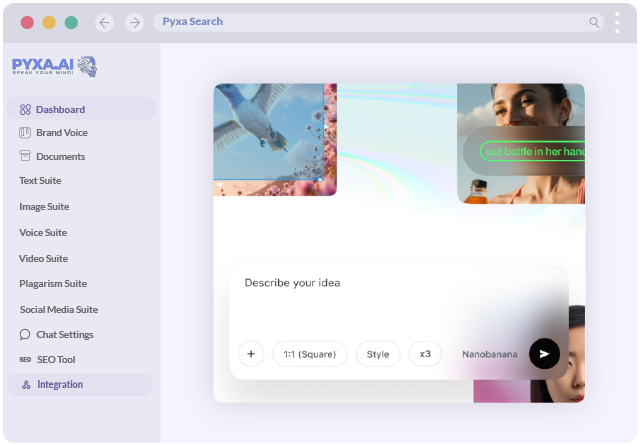
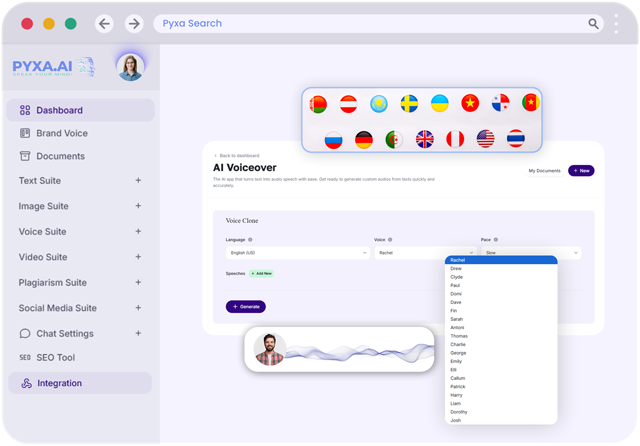
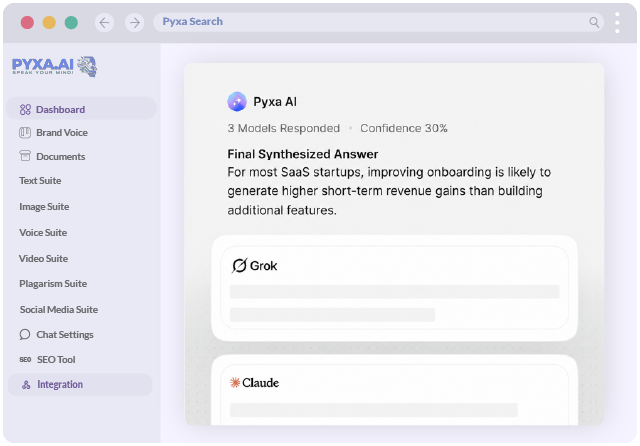
Real screens from the Pyxa app. Pick a feature to see it.
Prices checked on the vendors' pages on 2026-11-23.
| Claude | Gemini | Pyxa AI | |
|---|---|---|---|
| Entry paid plan | Claude Pro $20/mo ($17/mo yearly) | Google AI Pro $19.99/mo | Master Creator $49.99 once |
| Models on the $20 tier | Opus, Sonnet, Haiku | Gemini 4 Neon, Hydrogen, 3.1 Pro | Claude Sonnet 5.5, Gemini 3.8, GPT 6.1 Sol, Grok 4.7 and more in one login |
| Top model needs | Max at $100/mo for Fable | AI Ultra from $99.99/mo for Carbon | New models added to your plan at no extra cost |
| Image generation | No, reads images only | Yes, plus Flow credits | Yes: Midjourney, Nano Banana 2.1, GPT Image 2.5 |
| Video generation | No | Trial of Veo 3.1 Lite on Pro | Veo 3.1, Kling, Luma |
| Extras | Claude apps | 5 TB storage, Deep Research | 150+ templates, SEO tools, chatbot builder, voiceover, AI Council |
| Usage limits | Reset every 5 hours and weekly | Plan limits apply | No daily caps, no API keys |
| Billing | Monthly or yearly | Monthly | One payment, 7-day money-back guarantee |
Chat with any model and switch in one click, without four separate subscriptions.

Write SEO articles with several models, check plagiarism and publish to WordPress in one click.

Keep a brand voice per client and deliver plagiarism-checked drafts faster.
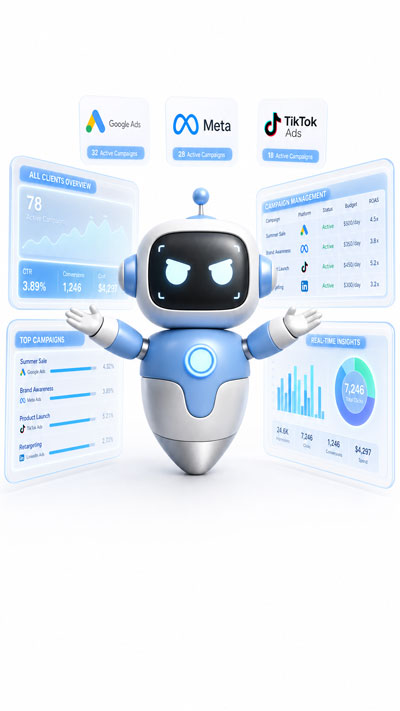
Ad copy, landing pages, emails and creatives for many clients from one place.
Lifetime pricingNo monthly fees, no daily caps, no API keys. New models are added to your plan at no extra cost.
Still unsure? Every plan has a 7-day money-back guarantee.
Pick the right model for each task and stop paying for two chatbot subscriptions. Lifetime plans start at $49.99, with a 7-day money-back guarantee.