
On October 9, 2026, millions of free Gemini users woke up to a different app. The model they’d been using, the one their prompts were tuned for, their workflows built around, their projects saved in, was gone. In its place: Flash-Lite, the smallest, fastest, weakest model Google makes. No warning in the app. No choice. Just a quieter, dumber assistant where the good one used to be.
This is what happens when your free AI plan downgrades your model overnight. And if you build your work on a free tier, it isn’t a question of whether it happens to you; it’s when, and how much of your workflow breaks when it does.
The October 9 Downgrade, Step by Step
The change was announced in a help article Google published on October 3 titled “Changes to Gemini model access and limits. The building was basic and harsh: Beginning Oct. 9, Gemini app users without a Google AI plan are capped at Flash-Lite. AI Plus ($4.99/month) retains Flash-Lite and Flash, but without Pro, which happens when you get an email message. AI Pro and AI Ultra have the complete collection, with AI Pro also receiving Deep Think.
Prior to the update, free users would have access to Flash-Lite, Flash, and a few Pro accounts. Those were the final two, which are behind a paywall. The free tier previously provided 3.6 Flash and various amounts of 3.1 Pro; since October 9, the free tier includes only Flash-Lite (which 9 to 5 Google says it is the 3.5 generation), one full generation back.
The goal of the deal is to get your model back for the cost you have to pay. Flash is available on AI Plus for $4.99 per month. People now need AI Pro at $19.99 for Pro, the model that truly impresses people. The downgrade is a funnel, and the funnel has a cost at every step of the process.
What a "Lite" Model Actually Costs You
Flash-Lite is built for short, everyday tasks, and for those, it’s fine. But “fine for quick questions” is a long way from what most people use AI for. The downgrade costs you in four ways that don’t show up on any pricing page.
Quality
A lite model is a smaller model: weaker reasoning, shallower and shorter answers, more errors on anything complex. The draft returns thin. The subtle analysis is now lost. There’s no error message, only bad work that you will have to detect, and that’s if you ever do.
Your prompts stop working
The months of tuned prompts (the ones which gave exactly the output desired) were tuned for a particular model. A lite model is another way of understanding the same prompt. Your best prompt turns into a mediocre prompt in one night, and there’s no migration guide for that.
Your projects degrade
All saved, auto-templated, and automated items from the old model are now being run on the new model. The content pipeline that you’ve created is producing shoddy results, and you have to redo it around a weaker model or pay up.
The fallback trap
Even paid users are not safe: there is now a change in how the usage limits will be calculated, and if you reach the limit, paid users will continue the chat with Flash-Lite. Flash-Lite is now everyone’s default option; the standard to which everyone is reduced when utilizing the product too much.
ChatGPT's Version: The Silent Downgrade
Google released a help article about its downgrade. OpenAI’s free tier slows down less dramatically, rather than raising a single alarm, by offering limited resources.
Free ChatGPT lets you have unlimited text chats every day, but the suite of tools around the chat is limited: You get 3 file uploads per day with Free ChatGPT, compared to 80 file uploads every three hours with paid plans. The rate of creating images is limited to 2-3 images per day. All research, voice, and memory are capped, and when they are capped, you wait for an upgrade or reset. The first wall that most people stumble on is file uploads – three files a day, and that’s it. You will have to attach 3 documents to your first prompt to complete the uploads until the allowance runs out.
No ceremony has been observed to downgrade the model itself repeatedly. The default was free for several iterations (GPT-4o, GPT-5.3, GPT-5.5, GPT-6 Luna), and at one point you were able to use the full model for about 10 messages per five-hour period, but then later downgraded to the Mini model. And for the last 26 months, since February 9, 2026, the free tier has been ad-supported. The funnel shape of the free tier is repeated everywhere, and the funnel gets tighter over time.
Why Free Tiers Downgrade
There’s no malicious intent in this. It’s arithmetic. Each AI response represents a cost to the vendor for computation, and responses using the most powerful models are significantly more expensive than the much lighter models; on Google’s own API pricing, 1,000 text responses cost $6.54 on Flash-Lite, $11.34 on Flash, and ~$40 on Pro. If a user is a free user on the Pro model, the user will cost six times more than the user does on Flash-Lite. Figure in millions of free users, and the free tier comes in as the costliest product the company offers.
So the vendors do what any business does: They shift the good models behind the paywall, let the cheap model do the selling, and let the downgrade do the selling. The free was never a product. It was an ongoing trial until the vendor set the end date.
The lesson of October 9 is that’s the reality. Your workflow, your prompts, your saved projects, your habits- it’s all built on infrastructure they can reprice overnight. It is all about whether you have access to it or rent access, but have a rental agreement that is subject to change.
The Fix That Isn't a Fix
The simple answer is that you just pay: $4.99 for Flash, $19.99 for Pro, and $20 for ChatGPT Plus. The model is also returned if the person pays, until the next announcement. This year, the $100 and $200 tiers were added; the Pro tier, which was included in AI Plus, was dropped, and the free tier, which had three models, now has one. All levels of this market have been renegotiated, renamed, or shortened over the past year. Paying the ransom only one time and then once again at the next level.
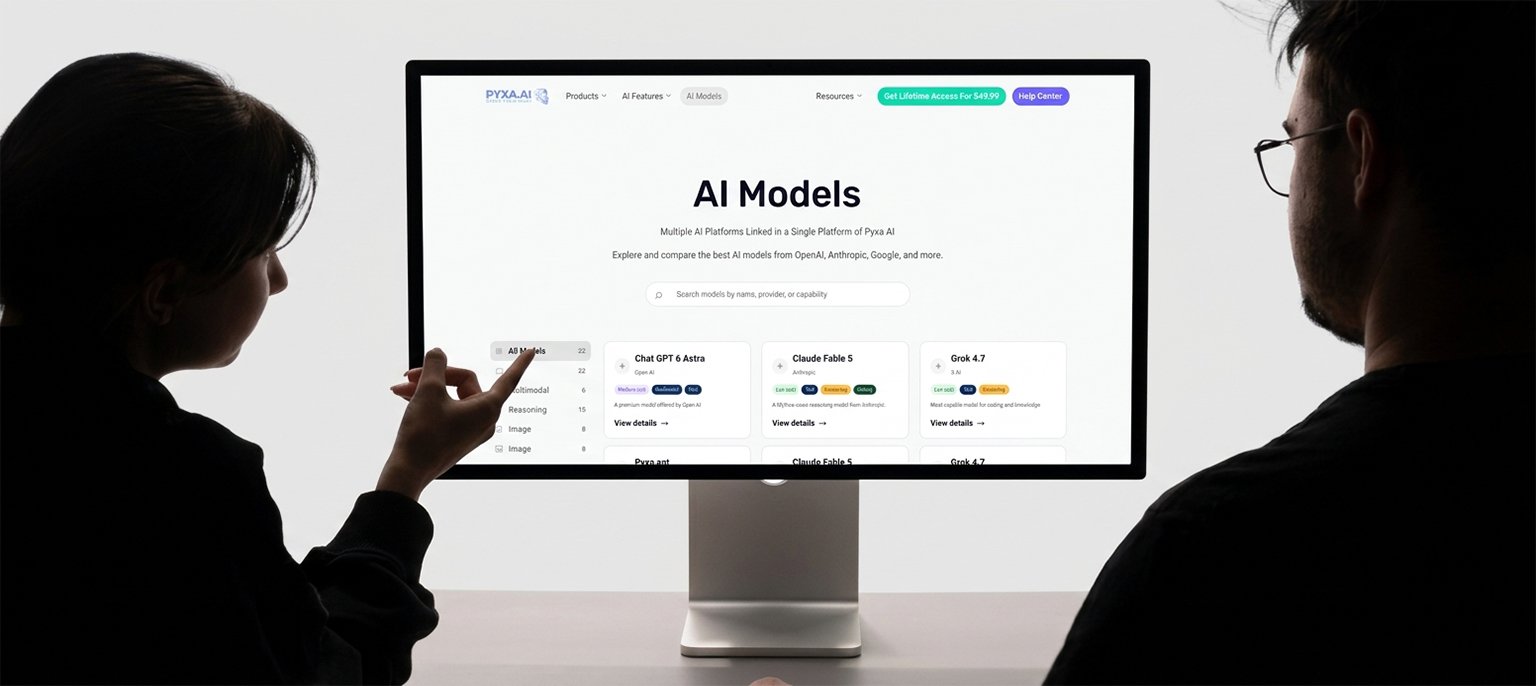
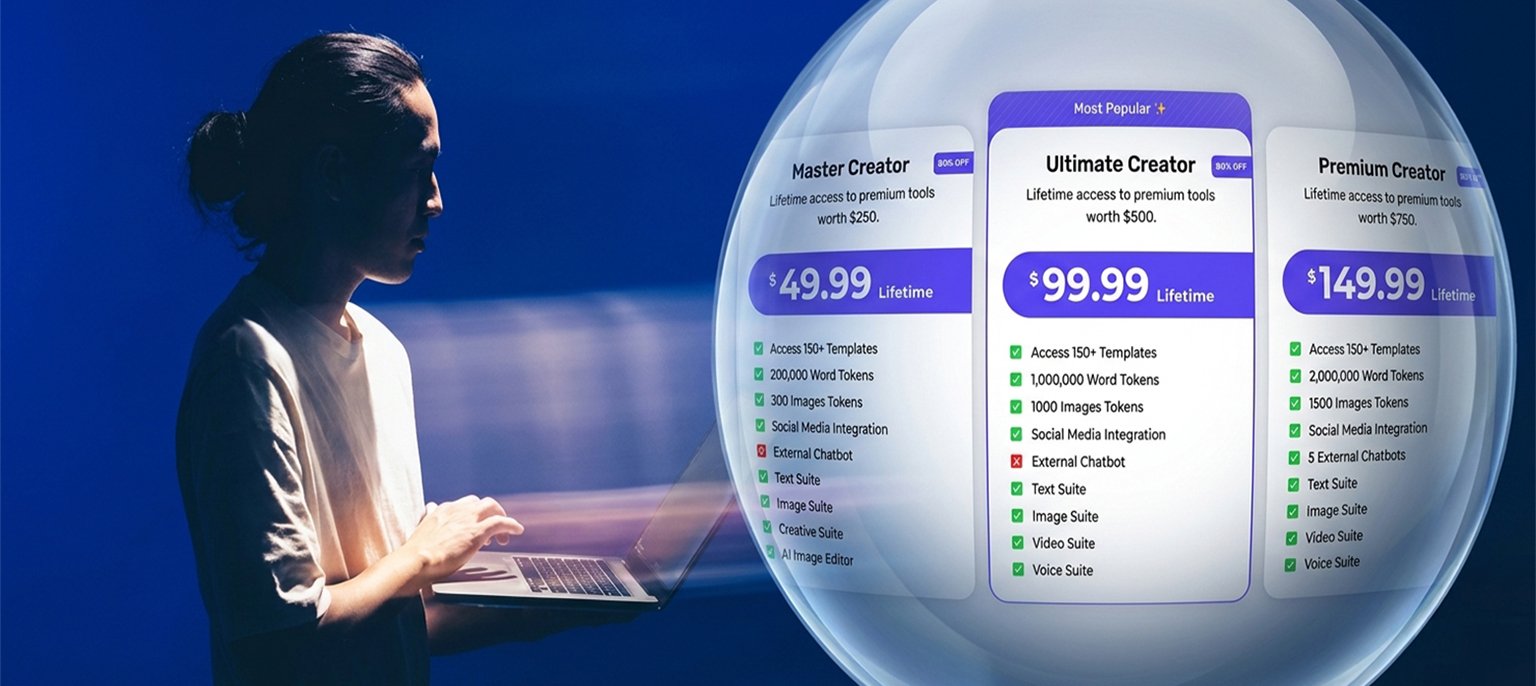
The other option is to forgo renting the model and become the owner of the access instead. Multi-model AI chat is at the heart of Pyxa AI, which costs $49.99 one-time, a bargain compared to Google AI Pro, which is $100 for a month or less, and half a month or less for a multi-model plan. The tiers of tokens (Master Creator 200,000, Ultimate Creator 1,000,000, Premium Creator 2,000,000 word tokens) do not expire or run out and are renewed every year for lifetime members. There are no tiers to drop to a lower level, no free tier, no such thing: You pay once, and you get what you paid for. Plus, if the 7-day money-back guarantee is included, then it’s a trial, not a leap.
There’s no vendor that will guarantee its models will stay the same. However, a subscription can never be as newsworthy as a lifetime payment that isn’t tied to next quarter’s pricing conditions.
The Bottom Line
October 9 wasn’t an accident or a glitch. It was the business model working as designed: the free tier narrows, the good model moves behind a paywall, and your workflow pays the price. The only durable defense is access you own, one payment, no tiers, no overnight downgrade. Because the next model change is already scheduled. The only question is whether your work depends on it.
Your models, your workflow, your terms, $49.99 once, with Pyxa AI.