All three AI labs now sell the same number: about $100 a month. ChatGPT Pro 100 is $100. Claude Max is $100. Google AI Ultra is $99.99. The convergence is no accident; $100 a month is the price the industry has decided a serious creator is worth.
The question is whether a serious creator should pay it. Because $100 a month is $1,200 a year. And $1,200 a year is twenty-four times what Pyxa AI charges once: $49.99, forever. This post answers the $100 question the way a creator’s budget demands: what the money buys, who actually needs it, and what the same money buys everywhere else.
What $100 a Month Buys
The three $100 plans are strikingly similar in structure, and each one is built around the same idea: usage headroom.
ChatGPT Pro 100 ($100/month)
After OpenAI doubled usage of Codex on Oct 29, it dropped the five-hour limit and added 10x Plus usage in Work and Codex. It also comes with $100 worth of OpenAI API credits per month, which is money that can be spent on the OpenAI API.
Claude Max ($100/month)
Provides 5x Pro usage every 5 hours, each week, and $100 per month in Claude API credits. The allowance is larger than what Pro has; the models are the same: Opus, Sonnet, Haiku, Fable.
Google AI Ultra ($99.99/month)
You will receive 5x AI Pro limits, 10,000 Flow video credits, $40 a month in Cloud credits, 20 TB of storage, and YouTube Premium if available.
What do all three have in common? They sell more of the same. More messages, more usage, more credits, from one lab, one interface, for one capability family. All of them don’t add a second ability. In fact, the $100 isn’t even enough to get you images, video, voice, or publishing. It allows you to purchase additional chat.
What $100 a Month Costs Over Time
Monthly pricing hides its own weight. Run the numbers:
- One month: $100. Twice Pyxa AI’s $49.99 lifetime payment.
- One year: $1,200. Twenty-four times Pyxa’s lifetime price.
- Five years: $6,000. One hundred and twenty times Pyxa’s lifetime price, for a single lab’s chat subscription.
- And the price never stops. These plans are monthly-only with no annual discount. You pay $100 in month 60, exactly as you paid in month 1, or you lose access entirely.
Now compare that to what the actual cost of a creator’s entire workflow is. A realistic solo creator stack, one chat assistant (~$20), one image tool (~$10–$30), one video tool at a mid tier (~$30–$50), and a voice or music tool (~$10–$20), runs roughly $70–$120 a month, or $840–$1,440 a year, for tools that honestly sit idle most days. The income for a full-time freelancer is about $100 per month with a combination of 4+6 subscriptions. The $100 level is not a replacement for that stack; it is an addition to it or a side one to it, as the highest-priced single line in a budget that is already five lines deep.
The Real Question: Do You Need $100 of Chat?
Most $100 plan marketers are about to discover the not-so-good news: Most creators don’t require $100 worth of chat. This one $20 chat assistant will do your writing, research, brainstorming, and a lot of light image and coding work, but most creators, freelancers, and side-hustlers don’t need to pay for five AI tools. There’s just as much variation between people as there is between the services themselves, but the vast majority of individual knowledge workers will fall somewhere between $20 and $60 per month, and anything more than $100 per month is generally not worth it unless you’re a business using AI to create valuable products.
The simple advice from independent reviewers is to avoid ChatGPT Pro at $100 per month, unless you opt for Plus every week. If you’re not pushing the limits of Plus, then using Pro at $ 100 is a good way to spend the “headroom” that you’ll never utilize, the most expensive form of capacity. In the same way, it works with Max and Ultra. There is a $100 tier for those who are using it heavily: coding for 12 hours a day, running hundreds of long reasoning tasks per week, or consuming API credits that make up for the cost of the subscription. Unless that is you, the $100 won’t buy you any ability. It’s buying comfort.
Even if it’s you, the breadth problem still exists. The creator’s workflow consists of writing jobs, image jobs, video jobs, voice jobs, publishing jobs, and $100 per month purchases for one job, deeply, from one lab. The other four jobs still require their own tools, subscriptions, and tabs. The $100 plan provides a solution to the depth issue. It does not address the fragmentation issue.
Who Should Pay $100 a Month?
It’s fair to say some people ought to. If you run through $100 worth of API credits each month anyway, then Max and Pro 100 are pretty much free credits you would get even if you didn’t sign up for them. If you are developing code every day for several hours, the usage multipliers (5x – 10x) become self-justifying in continuous flow if you are coding with Claude Code or Codex. For businesses that generate revenue from AI output at scale (agency work, high-volume production), a $100/month cost is insignificant compared to the revenue generated, and the priority access and top models justify the investment.
This is a cost of doing business for an AI-driven business. One lab’s chat is not the place to start spending $100 a month, or if you’re a freelancer, if you have to work with AI, or if you’re a side-hustler publishing daily. If you’re a solo creator building an audience, or a side-hustler publishing daily, or a freelancer who has to use AI, that’s not where $100 a month goes.
The $49.99 Alternative
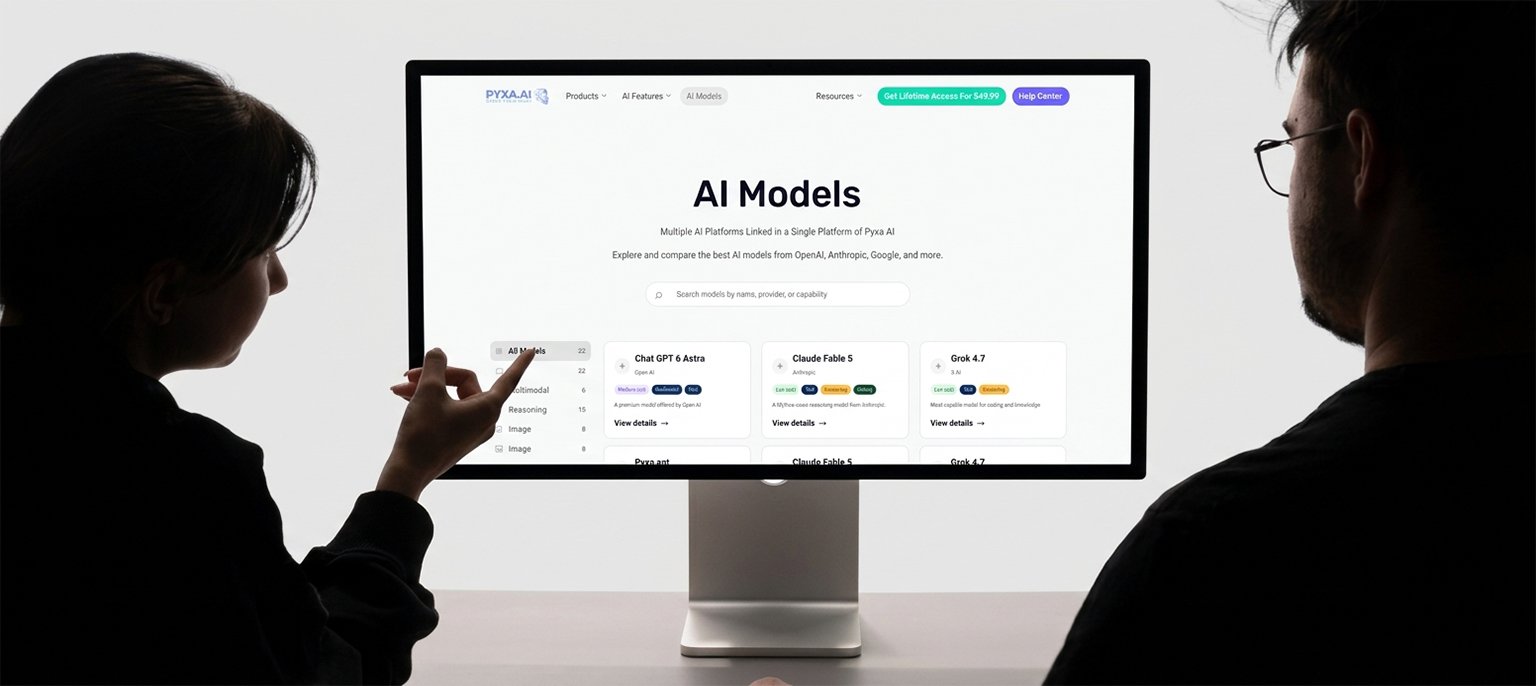
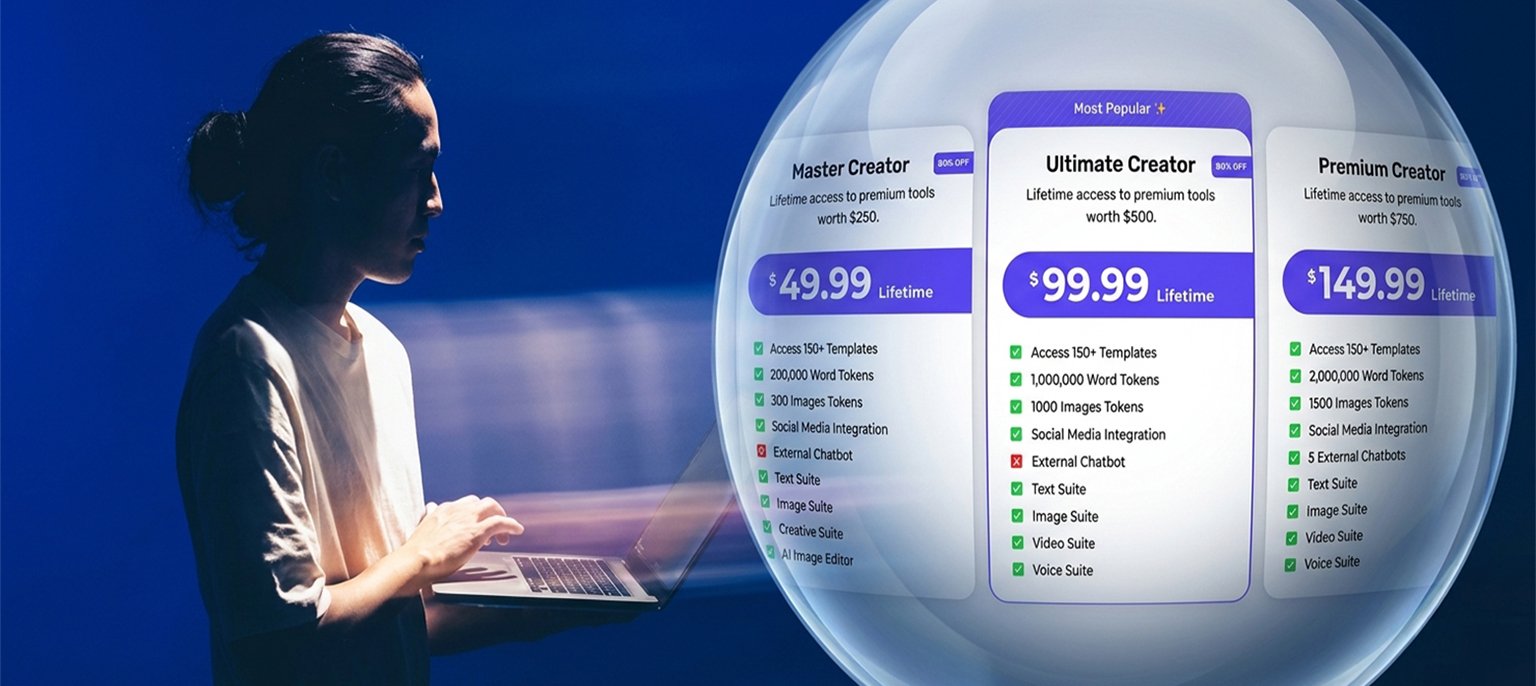
Pyxa AI’s $49.99 is a one-time lifetime payment, less than half of one month of any $100 plan, for 28 tools across five suites: multi-model AI chat, a text generator with 150+ templates, SEO tools, the full visual suite, video generation (Sora 2 Pro, VEO 3.1, KLING, LUMA), the Voice & Audio Studio with voice cloning across 100+ languages, social media management with scheduling and analytics, a chatbot builder, and WordPress publishing with no plugin required. Its own comparison prices the equivalent separate subscriptions at $259 a month.
The usage model is capped and honest, with token tiers (Master Creator 200,000, Ultimate Creator 1,000,000, Premium Creator 2,000,000 word tokens) that never expire and renew annually, and there’s a 7-day money-back guarantee. One month of a $100 plan costs twice as much as Pyxa AI costs forever. One year costs twenty-four times as much.
The Bottom Line
$100 a month is a fair price for heavy users who burn through it, and a tax on everyone else. Before you pay it, check whether you’re actually maxing out the $20 plan, and count what the rest of your workflow costs on top. For most creators, the answer isn’t a bigger chat subscription. It’s a smaller bill for a wider platform, one payment, once, for the whole workflow.
$100 a month, forever, for one lab’s chat, or $49.99 once, for all of it. That’s Pyxa AI.