Everyday AI users
Chat with any model and switch in one click, without four separate subscriptions.


 Comparison · 2026
Every model you would otherwise pay for separately
 ChatGPTClaude
 GeminiGrok
 DeepSeek
 Perplexity
 Midjourney
 Nano Banana
 Flux
 Ideogram
 Imagen 4
 Veo
 Kling
 Luma
 Wan
 HeyGen
 ElevenLabsChatGPTClaudeGeminiGrokDeepSeekPerplexityMidjourneyNano BananaFluxIdeogramImagen 4VeoKlingLumaWanHeyGenElevenLabsPro $20/mo ($17/mo annual)
Grok: Premium $30/mo
Pyxa: From $49.99 once
Claude Code on Pro; leads shared coding benchmarksGrok: Grok Build and cloud agents on Premium
Pyxa: Switch between Claude Sonnet 5.5 and Grok 4.7 with one click
Up to 1M context windowGrok: 500,000 context window (OpenRouter)
Pyxa: Both models in one login
Long-form, consistent voiceGrok: Short, direct, casual
Pyxa: Run both on one brief, keep the better draft
Web searchGrok: Web and X
Pyxa: Grok 4.7 and Perplexity in the model list
Not listed on the pricing pageGrok: Imagine, video on Premium
Pyxa: AI Image Pro and AI video tools
Prices as listed on the official pricing pages on 2026-11-25. Pyxa is one payment, with no monthly fees ever.
| Plan | Price | What you get |
|---|---|---|
| Claude Pro | $20/mo ($17/mo billed annually) | More usage than Free, Claude Code, Projects, Opus, Sonnet and Haiku models |
| Claude Max | $100/mo | 5x Pro usage, Fable included up to half your weekly limit |
| Grok Premium | $30/mo | 4x the usage of Plus, latest Grok models, images and video, Grok Bot |
| Grok Super | $100/mo | 15x the usage of Plus, 1080p 15-second video, priority access at peak times |
| Pyxa AI Master Creator | $49.99 once | Lifetime access to text, image, video and voice tools with leading AI models in one dashboard. New models added at no extra cost. |
Both plans combined: $20 + $30 per month times months vs Pyxa's one-time price. Taxes excluded.
Anthropic sells Claude and xAI builds Grok, and each ships a family of models. The consumer plans do not give you every model, so it helps to name the ones that matter here. On the official Claude pricing page, Claude Pro lists Opus, Sonnet and Haiku, a context window of up to 1M depending on the model, Claude Code and Projects. Fable, the newest tier, is paid with usage credits on Pro and included up to half your weekly limit on Max ($100/month).
On the official Grok pricing page, Premium ($30/month) lists the latest Grok models, Grok Bot, faster chat and image and video creation. The page now sells Grok inside the X Subscription tiers: Free, Plus ($8), Premium ($30), Super ($100) and Ultra ($200). Many people still search for the $30 tier as SuperGrok, so this page uses both names where it helps.
For the model-to-model comparisons below we use Claude Sonnet 5.5 against Grok 4.7, because those are the two models you can also run side by side inside Pyxa. Benchmarks come from public leaderboards and comparison sites linked at the bottom. Many scores are reported by the model makers, they change monthly, and a gap of a few points is a tie. Test your own work before you commit.
Claude has the stronger public record for coding right now. LLM Stats lists Claude Sonnet 5.5 ahead of Grok 4.7 on five benchmarks that both are scored on, including Terminal-Bench 4.0, FrontierSWE V2 and CursorBench 4.0, and lists Grok ahead on none of the shared ones. BenchLM's SWE-bench Pro board dated November 23, 2026 puts Claude Fable 5.2 first at 93%, Opus 5.5 at 89.9% and Sonnet 5.5 at 81.3%, all reported by Anthropic. We found no matching published row for Grok 4.7 on that board.
Grok is not far behind where cost is the issue. On OpenRouter, Claude Sonnet 5.5 lists at $2 per million input and $10 per million output, while Grok 4.7 lists at $2 and $6. An independent test by Evolink found that Grok 4.7 wrote about 70% more output than Claude Opus 5 on the same coding suite and still finished about a third cheaper, because its output rate is so much lower.
Both plans include a coding product. Claude Pro includes Claude Code. Grok Premium lists Grok Build, cloud agents and automations, and AI code reviews through Cursor.
Verdict: Claude for multi-file changes, refactors and long terminal sessions; Grok when you run lots of cheap API calls and can accept a bit less polish. The same search, claude or grok for coding, has a practical answer: keep Claude as the main developer and ask Grok for a second opinion on a tricky bug.
Claude wins on context size. OpenRouter lists Claude Sonnet 5.5 with a 1,000,000 context window and Grok 4.7 with 500,000. In words, that is roughly 700,000 versus 350,000, which is the difference between a whole book plus appendices and half of it in one request.
Size is only part of the story. Both families can read files, but the plans differ in how much they let you do per week. Claude Pro limits usage every 5 hours and every week, and Grok runs on a shared weekly pool where Premium is listed at 4x the usage of Plus. Neither page publishes a number of pages or messages, so we cannot say how many long reports a plan handles.
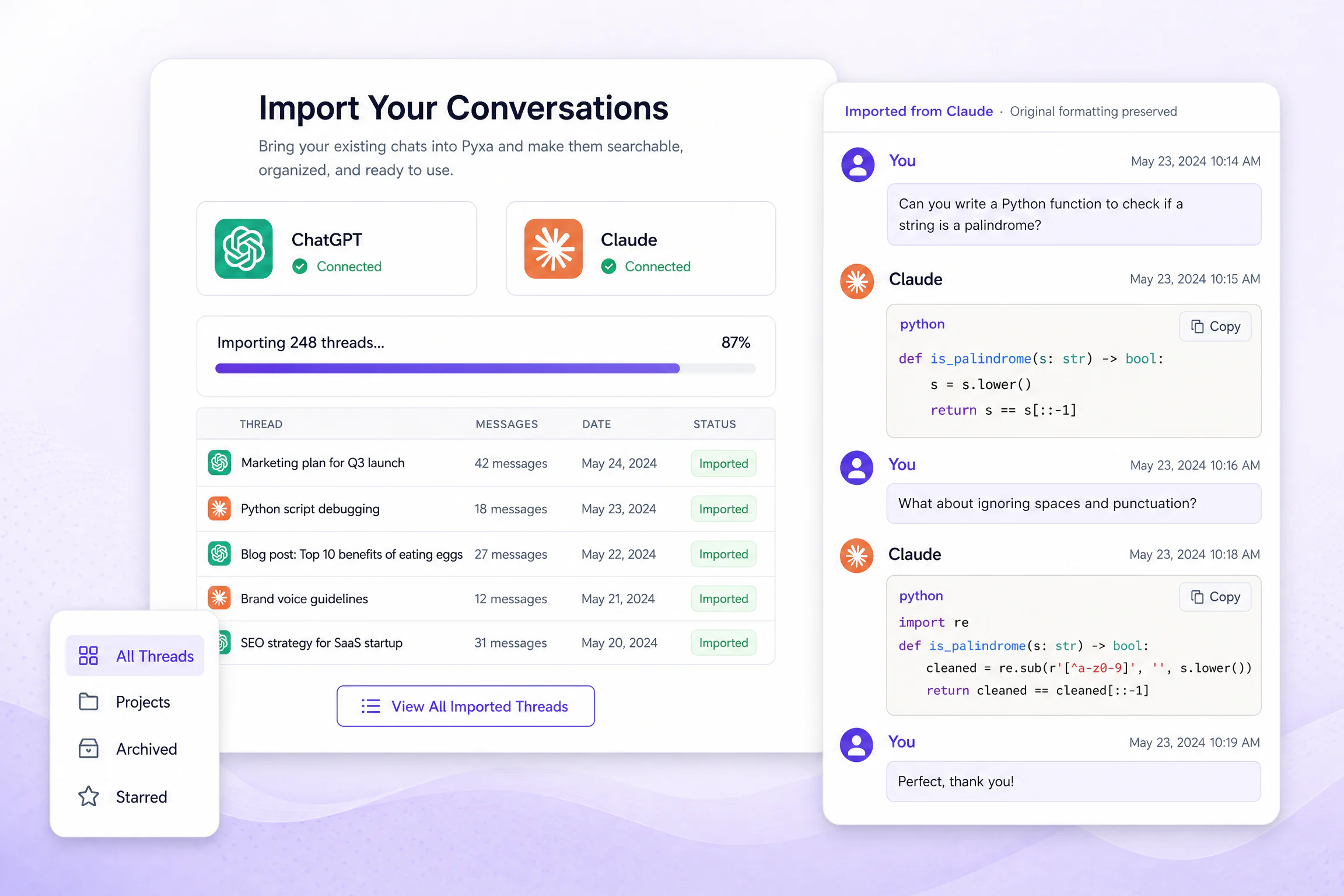
Verdict: Claude for contracts, research packs and codebases that need the whole file in view. Grok for shorter documents where you want a quick answer. If you move between tools, you can also bring old Claude chats into Pyxa through Import Conversations and keep going there.
There is no public benchmark for voice, tone or editing taste, so any claim that one model writes better is partly opinion. Here is the honest version of that opinion. Claude is widely described as the one that holds a consistent voice across a long draft and edits without flattening the style. Grok is described as blunter and more conversational, and it is more willing to take a strong stance, which suits social posts and punchy copy more than formal reports.
Treat those descriptions as common impressions, not measurements. The cheapest way to settle it for your own work is to run the same brief through both and compare the drafts.
Verdict: Claude for long-form, brand-voice and edit-heavy writing; Grok for short, casual and attention-grabbing posts. That is the case for running both on the same prompt, which the Multi-Model AI tool in Pyxa is built for.
Grok is the better choice when the answer is happening right now. xAI describes Grok as giving real-time answers from the web and X, and that link to X posts is something Claude does not have. Claude can search the web (the Claude Free plan lists web search, file creation and code), but it does not read the X timeline the way Grok does.
That matters for breaking news, live reactions, market chatter and anything where people are posting first and writing articles later. It matters less for evergreen research, where both tools can cite web pages.
One caution for either tool: real-time answers still need checking. Open the sources before you repeat a claim.
Verdict: Grok for live events and X conversations; a tie for ordinary web research.
Reasoning is the one category where the scoreboards disagree. Vals AI's side-by-side of Claude Sonnet 5 and Grok 4.7 shows Grok ahead on 15 of 19 shared benchmarks and Claude ahead on 4. LLM Stats, comparing Claude Sonnet 5.5 and Grok 4.7, gives Claude the lead on the five it highlights. The difference is mainly which Claude version is tested, which benchmarks are shared and who ran them.
On tone, Claude tends to answer carefully, adds caveats and asks about unclear requests. Grok tends to answer fast and directly. Neither is better by itself. If you want a model that pushes back and flags uncertainty, use Claude. If you want a fast first pass you will edit anyway, Grok is fine.
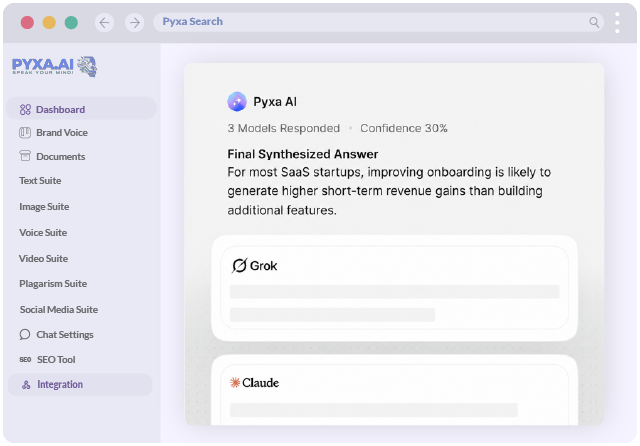
Verdict: too close to call on reasoning, so test your own prompts. Claude for careful, caveated answers; Grok for quick direct ones. For hard questions, the AI Council in Pyxa runs several models in parallel and shows where they agree and disagree, which is more useful than trusting one score.
Prices below were read from the official pages on November 25, 2026 and exclude taxes.
| Plan | Price | What it adds |
|---|---|---|
| Claude Free | $0 | Limited usage every 5 hours and every week; web search, files, code |
| Claude Pro | $20/mo, or $17/mo billed annually ($200 up front) | More usage, Claude Code, Projects, Opus |
| Claude Max | $100/mo | 5x Pro usage, Fable included up to half your weekly limit |
| Claude Ultra | $200/mo | 10x Pro usage every week, no 5-hour limit |
| Grok Free | $0 | Limited chat and agent requests |
| Grok Plus | $8/mo | Shared usage pool, chat, voice, Imagine, Build |
| Grok Premium | $30/mo | 4x Plus usage, latest models, images and video |
| Grok Super | $100/mo | 15x Plus usage, 1080p 15-second video |
| Grok Ultra | $200/mo | 50x Plus usage |
At the standard tier, Claude Pro is $10 a month cheaper than Grok Premium. Both together cost $50 a month, or $600 a year. Grok's official page notes that third-party models inside Cursor are billed separately, and that its prices are subject to change, so check the page before you subscribe.
If your work spans several of these rows, the real answer to grok vs claude is that you want both, and paying $50 a month for the privilege adds up.
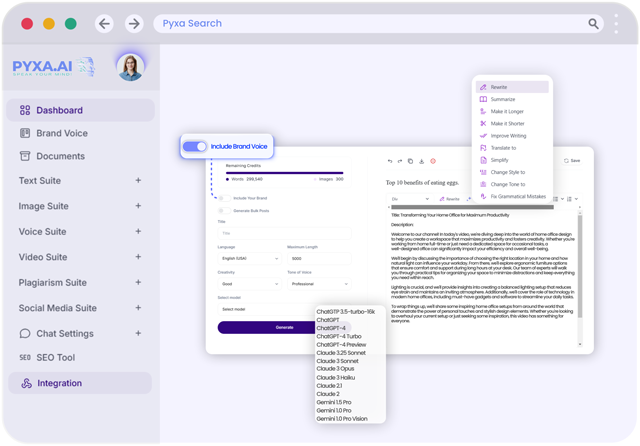
Pyxa lists both Claude Sonnet 5.5 and Grok 4.7 on its model list, alongside GPT 6.1 Sol, Gemini 3.8, DeepSeek v4 and Perplexity. You switch between models with one click, so the coding task goes to Claude and the quick take goes to Grok without opening a second subscription.
The AI Council goes a step further. It runs several models in parallel and gives you a combined view of agreements, disagreements and a consensus answer. For the Claude vs Grok question, that means you stop guessing which one is right for a prompt and see both answers next to each other.
The cost comparison is simple. Claude Pro plus Grok Premium is $50 a month. A Pyxa Master plan is $49.99 once, with lifetime access, no monthly fees ever and a 7-day money-back guarantee. When new models come out, Pyxa adds them to your existing plan for no extra cost. Pyxa is an independent platform that integrates with AI APIs and is not affiliated with, endorsed by or sponsored by Anthropic, xAI or other AI providers. It is not the Claude or Grok app, so features that belong to those apps, such as Claude Code, are not part of the deal.
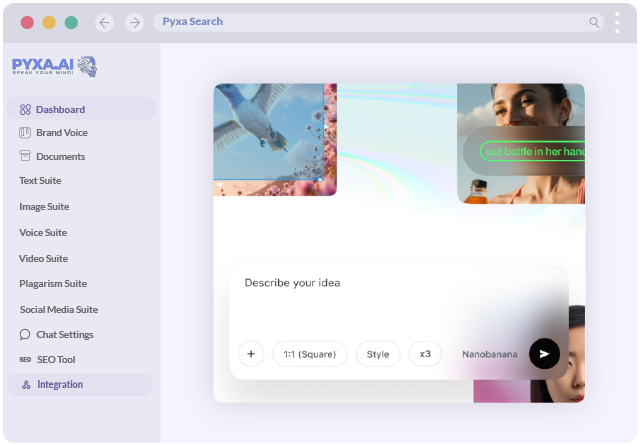
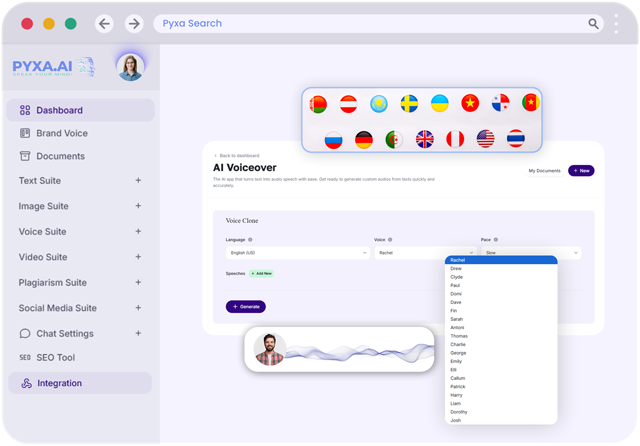
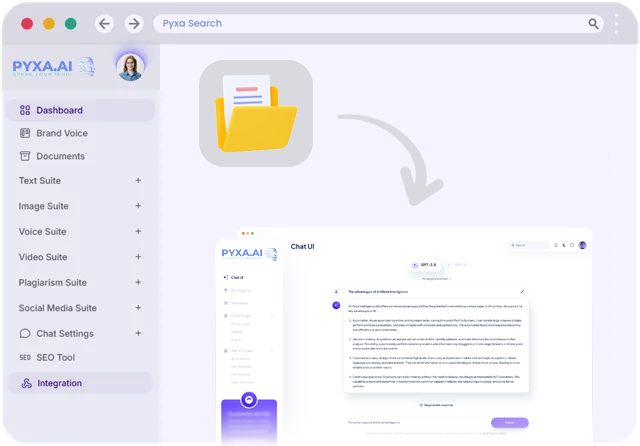
Real screens from the Pyxa app. Pick a feature to see it.
Official pages checked 2026-11-25
| Claude | Grok | Pyxa AI | |
|---|---|---|---|
| Price | Pro $20/mo ($17/mo annual) | Premium $30/mo | From $49.99 once |
| Coding | Claude Code on Pro; leads shared coding benchmarks | Grok Build and cloud agents on Premium | Switch between Claude Sonnet 5.5 and Grok 4.7 with one click |
| Long documents | Up to 1M context window | 500,000 context window (OpenRouter) | Both models in one login |
| Writing | Long-form, consistent voice | Short, direct, casual | Run both on one brief, keep the better draft |
| Real-time info | Web search | Web and X | Grok 4.7 and Perplexity in the model list |
| Images and video | Not listed on the pricing page | Imagine, video on Premium | AI Image Pro and AI video tools |
| Compare answers | One model | One model | AI Council runs models in parallel |
| Limits | Every 5 hours and weekly | Shared weekly pool | No daily caps |
| Official app | Yes (Anthropic) | Yes (xAI) | No, models used inside Pyxa |
Chat with any model and switch in one click, without four separate subscriptions.

Write SEO articles with several models, check plagiarism and publish to WordPress in one click.

Keep a brand voice per client and deliver plagiarism-checked drafts faster.

Ad copy, landing pages, emails and creatives for many clients from one place.
Lifetime pricingNo monthly fees, no daily caps, no API keys. New models are added to your plan at no extra cost.
Still unsure? Every plan has a 7-day money-back guarantee.
Pick the right model for each task and stop paying for two chatbot subscriptions. Lifetime plans start at $49.99, with a 7-day money-back guarantee.