HeyGen did not lose creators due to quality issues in 2026. It’s losing them due to mathematics. The platform’s credit system, which was a niggle at the time, is now the main gripe of a growing group of AI video users who signed up for unlimited video production only to find that they had signed up for a monthly video quota. Community sentiment on aggregated pricing for HeyGen is predominantly negative, with 46% of reviews rating the pricing as negative. The community opinion on aggregated sources of reviews for HeyGen is leaning 46% negative, with the main concern being that of credit limits being “too opaque” for new users and the high price jump from one plan to another. That’s not a side comment.
It is a shift in the structural signals being sent by creators, looking at what they truly want from an AI video platform, and more and more, it isn’t about the bells, whistles, and whiz-bang at an unpredictable price; it is about simplicity and cost predictability.
This post unpacks how HeyGen’s business model works on a practical level, why it’s pushing creators toward the adoption of flat-rate AI video tools, and what the top alternatives to HeyGen in 2026 are providing creators once they’ve played their monthly credit card counter.
The Real Cost of HeyGen in 2026: What the Pricing Page Does Not Say
HeyGen Creator is $29/month or $24/month billed yearly for 2026. It’s the number that’s most important to creators, and it is a correct number. It’s not the pricing page that has an issue. The issue is that it doesn’t say it loudly enough: HeyGen’s pricing model is a two-tiered one that includes a tier for your subscription level as well as a tier for your Premium Credit level.
HeyGen has two levels: an unlimited tier for your subscription, as well as a Premium Credits tier, which is an additional monthly credits pool for advanced AI features. It’s behind that credit pool that what most creators want is available: photorealistic Avatar IV generation and lip-sync video translation.
Now it’s time for math to bite. The generosity of the 600 credits doesn’t last long either, as at 20 credits per minute, this is about 30 minutes of high-quality avatar video per month. If you’re a creator who posts two to three short-form videos a week, which is a good amount for any kind of serious YouTube, LinkedIn or TikTok approach, that limit will be reached before the end of the month.
The reality of that production is that the overall amount to be spent is around $100 per month and not $29. This is the usual case where people end up posting a comment that HeyGen is “too costly. This is the most frequent situation that sees these people put up a comment saying HeyGen is “too expensive. The site isn’t lying about its pricing. However, the difference between the perceived and real cost is too great and has even made its way into a distinct content space within Reddit communities, YouTube reviews, and creator newsletters.
Credits Expire. Renders Fail. Budget Disappears
The financial frustration goes beyond the headline-to-reality gap. Premium Credits reset monthly. Unused credits do not carry over. For any creator whose content output is uneven month to month, busy during a product launch, slower during off-seasons, this means you are either over-paying for credits you cannot use or under-budgeted during the months you need them most.
Multiple reviewers across regions report charges far above their expected plan price, including failed renders that still consumed paid credits. That last detail is the one that erodes trust most quickly. Losing credits to a successful render is a known cost. Losing credits to a failed render with nothing to show for it is the kind of experience that sends a creator directly to a competitor comparison search.
Once generation becomes easier, teams start creating more versions, more tests, and more localized assets than originally planned, and HeyGen’s credit system directly penalizes this behavior. The platform’s quality creates appetite. The billing model punishes that appetite. That contradiction is the core of the 2026 creator exodus.
What Creators Are Actually Looking For: The 2026 Shift Defined
The shift away from HeyGen is not an indication of the demise of AI avatar video. The trend of leaving HeyGen is not the end of AI avatar video. The creator economy is expanding more rapidly than all other video content, with avatar-driven content. What creators are rejecting is the cost of an “anxiety” system of credit burn – the mental load of keeping track of your credit burn throughout your content calendar, the mid-month fear of looking at a credit balance before hitting render, and the yearly trap of being billed for the plan and then having to pay extra for when your output increases.
The change in 2026 is moving to the platforms that have the unit economics built into their design. Not because creators are not sophisticated in terms of cost, or are not sophisticated enough to know the best creative sessions occur when they’re not doing arithmetic between takes.
This is why creators are looking for a flat-rate HeyGen alternative in 2026: they want an AI avatar that speaks your exact script, without having to hire a talent, but they want the AI avatar, speech-over, script generation, and the video to be all in a single platform that doesn’t catch them off-guard with an unexpected bill.
How the Best HeyGen Alternatives in 2026 Are Structured
The best HeyGen alternatives in 2026 are not just based on the quality of avatars they can produce. They are playing with the full stack of production, the pre-production (writing, making assets, backgrounds, pictures), and the post-production (voiceover, social scheduling, cross-platform distribution). If you can absorb an entire content workflow into a tool, that’s far more advantageous than a single-function avatar studio, no matter how top-notch it can be.
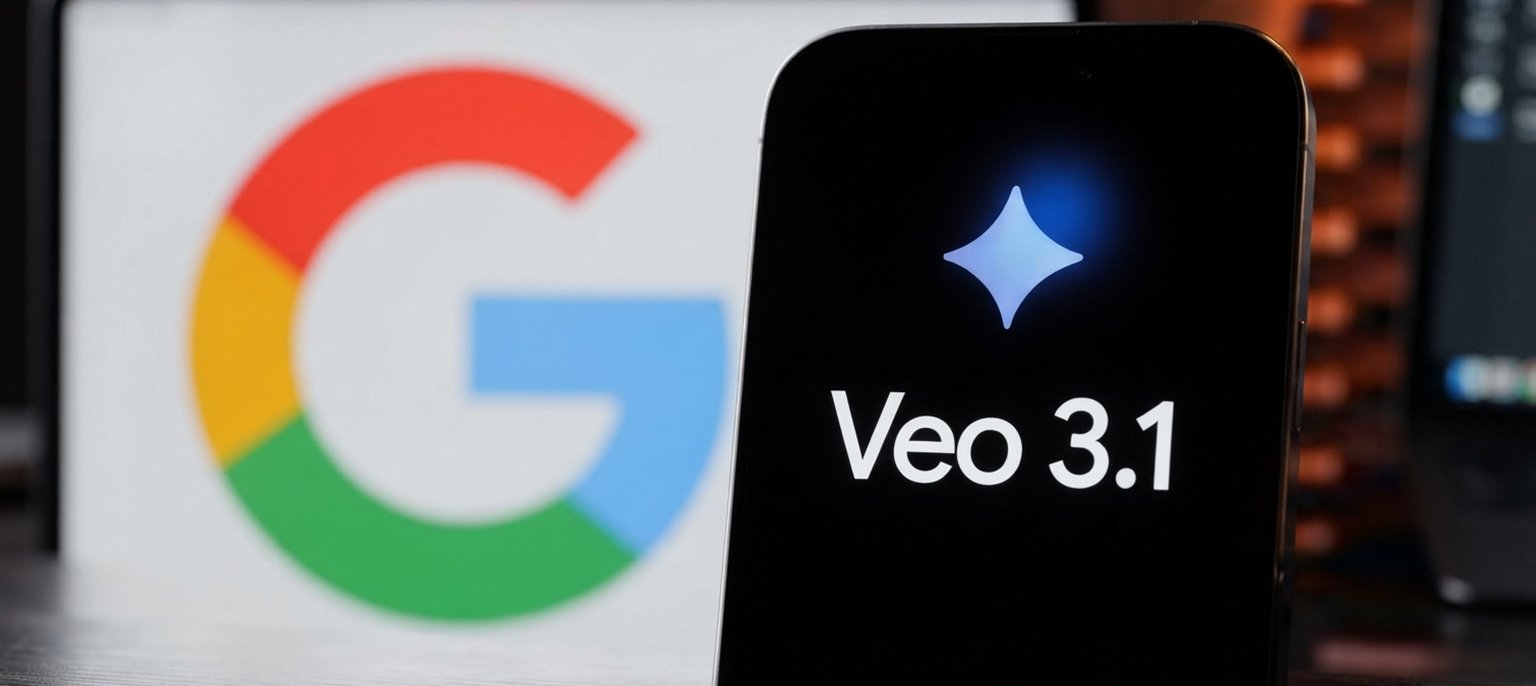
The entire Visual Creation toolkit, from avatars, cinematic video to image generation, all in one place, is a fundamentally different proposition from a metered credit window for one video format. As soon as your avatar is on the same dashboard that enables you to access cinematic-grade footage with Google VEO 3.1 and KLING AI 2.5 Turbo Pro to create hyper-realistic motion videos, the comparison of just one-avatar option like HeyGen becomes more than a feature comparison; it becomes a fundamentally different class of decision.
You’ve got studio-quality AI voice-overs for your visual stack, and you’ve already eliminated the need for three different subscriptions to get a hired narrator. If the voice you want isn’t a generic one, you can record your own voice and clone it to narrate every video you create in your own voice.
The Full Pyxa AI Stack vs. HeyGen: An Honest Comparison
What You Need | HeyGen | Pyxa AI |
AI Avatar video | ✅ (credit-metered) | ✅ (included) |
Cinematic video (VEO 3.1, KLING 2.5) | ❌ | ✅ |
AI Voiceover | ❌ | ✅ |
Voice Cloning | ❌ | ✅ |
Script generation (AI Writing) | ❌ | ✅ |
Social media scheduling | ❌ | ✅ |
Image generation & editing | ❌ | ✅ |
Custom AI chatbot | ❌ | ✅ |
Pricing model | $29–$149+/month | $49.99 lifetime |
Credits expire? | Yes, monthly | No, renewed annually |
Who Should Make the Switch Right Now
The strongest case for switching from HeyGen to a flat-rate alternative is made by three creator types:
- Volume creators publishing more than four videos per month who have already discovered that HeyGen’s base plan does not cover their actual output without top-ups. The math on annual spend is not close.
- Full-stack content teams who are currently managing HeyGen for video, ElevenLabs or Murf for voiceover, ChatGPT for scripts, Buffer for scheduling, and Canva for thumbnails. The combined monthly cost of that stack typically lands between $200 and $300. The consolidation math is decisive.
- New creators who have not yet locked into any platform. The worst time to discover that a credit-based tool does not match your production tempo is after you have published your content calendar around it and built a workflow on top of it. Starting on a flat-rate, full-stack platform eliminates that risk.
When you schedule and publish directly to every major platform from one dashboard, the question stops being “which tool do I use for this step?” and becomes “how much more can I create this month?”
Stop Paying Monthly for Tools You Can Own for Life
HeyGen built something genuinely impressive. But impressive technology packaged inside an opaque credit system that penalizes volume, surprises budgets, and expires unused allocation every thirty days is not a creative tool; it is a financial management problem disguised as one.
The 2026 shift is not a trend. It is a correction. Creators who built their workflows on subscription-first platforms are doing the math and realizing the only thing they do not own is the subscription itself.
Claim lifetime access to Pyxa AI, one flat payment for everything, no credits, no monthly bills, no ceiling
Pyxa AI includes AI avatar video, Google VEO 3.1 cinematic generation, KLING AI 2.5 Turbo Pro, voice cloning, AI voiceover, script generation, image editing, social scheduling, and 150+ premium AI models, all for a single lifetime payment starting at $49.99. Your tokens renew every year at no additional cost. A 7-day money-back guarantee removes every reason to wait.
The credits are gone. The bills are gone. Your creative ceiling just disappeared with them.
Frequently Asked Questions